

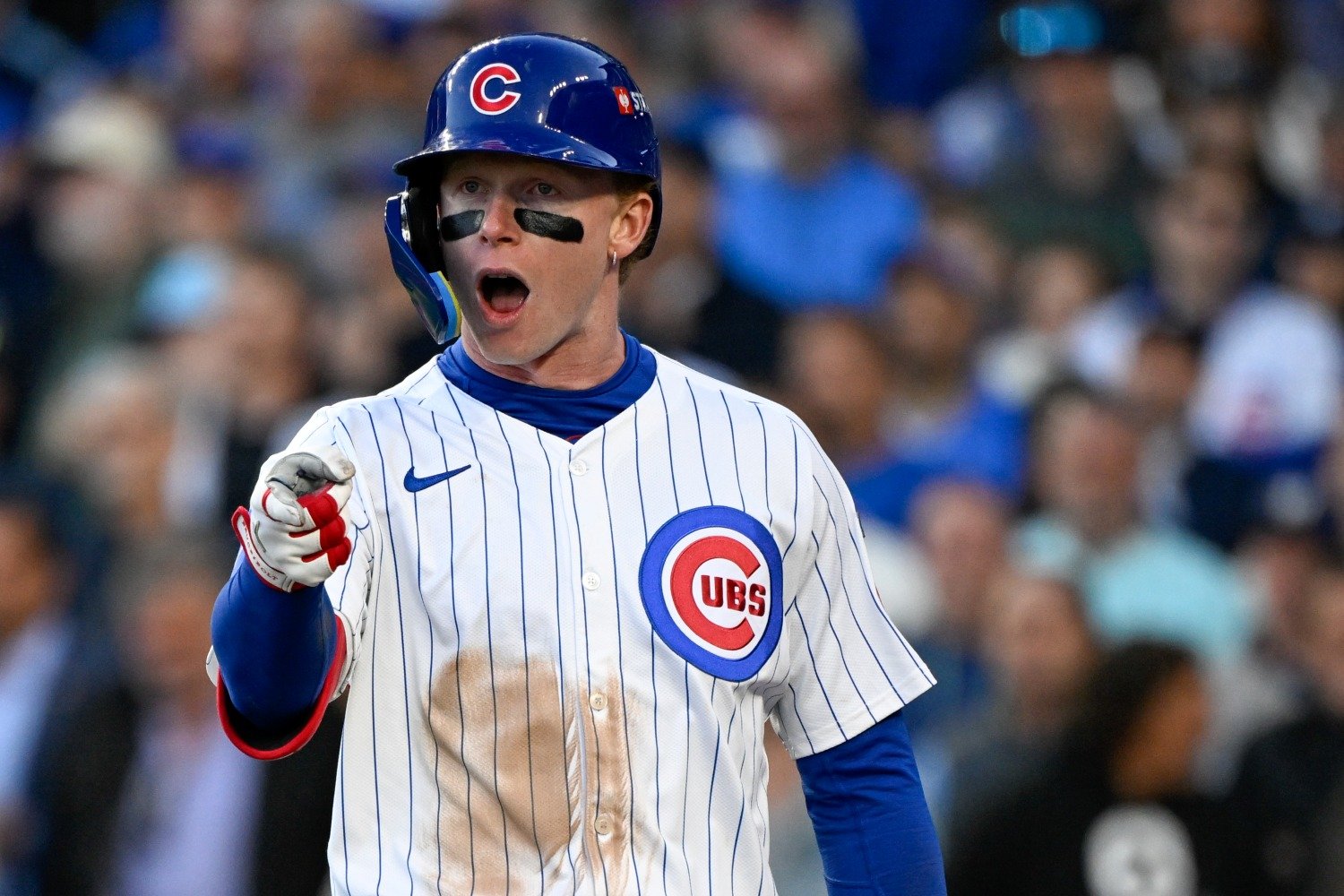
I love baseball. We’re a week from the trade deadline. Teams are texting back and forth, hunting either for the crucial piece that vaults them into the World Series or the unpolished kid who blossoms into a star a few years down the road.
My team is the Chicago Cubs. I’ve rooted for them since I was 6. I tried out for the team at Wrigley Field when I was 21.
The Cubs won the World Series in 2016 after 108 years of trying. By the summer of 2021 that core had peaked, and management started trading off the players who won the championship, looking for younger ones to rebuild around.
The Cubs had a charismatic infielder named Javy Baez from Puerto Rico. Baez made electric plays in the field that made you shake your head and smile, and at his peak he was a dynamic power hitter who could also steal bases. Pitchers eventually figured out that he couldn’t hold back on a breaking ball, even one headed a foot outside the zone. In his last stretch with the Cubs he was chasing more than 40% of the pitches thrown out of the strike zone. He struck out 184 times that year, the most in the National League.
The New York Mets saw the flaw too. They thought they could fix it, and they badly needed a colorful infielder who could make amazing plays.
The Cubs needed pitching. What they really wanted was a Mets prospect named Matt Allan, the top-rated high school arm in the 2019 draft who slid to the third round over signability and signed for $2.5 million. The Mets saw a future star and refused to move him. Instead they offered an outfielder named Pete Crow-Armstrong, who was 19, nursing a shoulder that needed surgery, and had played only six minor league games.
The Cubs had scouted Crow-Armstrong in high school in Los Angeles. In the 2020 draft they passed on him at pick 16 and took Ed Howard instead, a shortstop out of Mount Carmel, known for leading his Little League team from the South Side of Chicago to the Little League World Series. Crow-Armstrong went to the Mets three picks later.
The Cubs wanted Baez gone, so they made the deal for the kid they’d once doubted. The Mets got a dispirited Javy Baez, who still couldn’t lay off the outside breaking ball.
Crow-Armstrong looked like a left-handed version of Baez when he arrived. Great center fielder, swung at everything. But PCA, as he’s called, was completely dedicated to becoming more than a glove. He reached the Cubs at the end of 2023 and took over center field in 2024. He changed his stance, trained his eye to read the curve and the change, and sharpened his stroke until he could drive the ball out. This year he’s cut his swing rate more than any qualified hitter in baseball and become an MVP candidate. Over three seasons he’s turned into one of the best and most charismatic players in the game.
Data tells us what a player has done, not what he or she is capable of doing. Often the best decisions are the ones made reluctantly.
Pete Crow-Armstrong is a baseball zealot, a fanatic, an intense student of the game. Baez had given up on mastering the breaking ball. PCA treated it as a challenge to conquer.
Sometimes in life successful moves come down to luck. Matt Allan, the Cubs’ first choice, has had two career-shattering arm surgeries, and no Major League team has signed him since. The player they “settled for” became the one the team built around.
It happens in my business too. We buy a group of machines, and the one we knew least about, the ugliest one on the floor, the one we barely figured into the price, turns out to be the piece everybody wants.
A reluctant decision can be the ideal one.
Questions:
What’s the best — or worst — trade your team ever made?
Who’s the best player everyone passed on and lived to regret?

1 Comment
Kurt Warner– from arena football league to Super Bowl champion!
Worst trades ever (that I never saw), Babe Ruth, for I don’t know who?
Cubs letting Kyle Shwarber go for nothing!
Jordan drafted #3 and not 1.