
Every day, Jeremy Dutton walks into a classroom where manufacturing education represents far more than learning to operate a CNC machine. It represents opportunity, confidence and, for many students, a chance to rewrite their future.
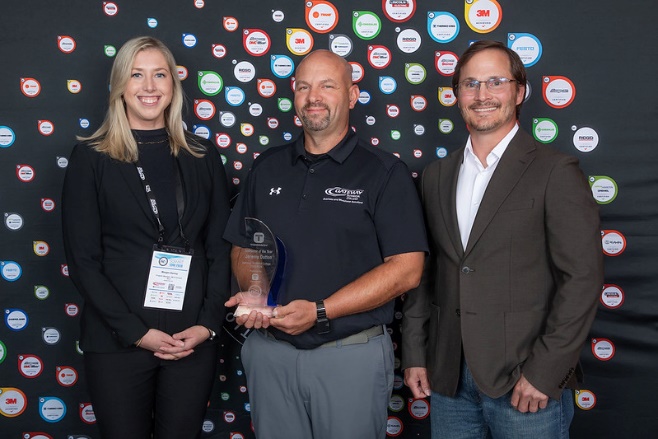
Through an innovative partnership between Gateway Technical College and the Racine Correctional Institution (RCI) in Wisconsin, Dutton is helping individuals develop the technical skills needed to pursue rewarding careers in advanced manufacturing. His work is helping address the manufacturing industry’s growing need for skilled workers while creating meaningful career opportunities for individuals preparing to re-enter the workforce. In recognition of his impact, Dutton received Tormach’s 2026 Instructor of the Year award, which recognizes educators who demonstrate exceptional leadership and innovation while preparing students for life after school
For Dutton, however, the recognition isn’t about personal accomplishment.
“To be an educator is to be a builder of futures,” he says. “The true joy of teaching isn’t found in a title or a plaque; it lives in the ‘lightbulb moment’ – that exact second a student’s frustration turns into understanding, and they realize, ‘I can do this.’”
“In hands-on education, we use machines to shape projects, but the real work is helping students shape themselves,” he adds. “Teaching them to embrace mistakes, troubleshoot with confidence and try again builds a resilience that lasts a lifetime.”
From the Shop Floor to the Classroom
Dutton’s journey into education began in manufacturing. While he enjoyed CNC machining, he discovered that his greatest satisfaction came from helping others learn the trade.
“My favorite part of the job was mentoring apprentices and helping my coworkers troubleshoot,” he explains. “I truly enjoyed sharing my knowledge and helping people, and I wanted to do that full-time.”
Today, he combines that passion with industry-grade Tormach equipment to introduce his classes to a field he believes is often misunderstood.
Building New Skills – and New Futures
The partnership between Gateway Technical College and the RCI is unlike most education programs. Since 2014, it has provided incarcerated individuals with a pathway to rehabilitation and career readiness through hands-on training.
Operating from a fully equipped mobile CNC laboratory, participants learn on industry-standard equipment while earning 14 Gateway Technical College credits that transfer directly into additional manufacturing education ventures, apprenticeship opportunities or the workforce after release.
Throughout the program, students gain hands-on experience operating CNC mills and lathes, programming G-code, interpreting blueprints, performing precision measurements and applying industry safety practices. By combining classroom instruction with the same technical foundations manufacturers expect from entry-level machinists, the program helps develop job-ready talent while addressing the skilled labor shortage facing the industry.
Making Manufacturing More Approachable
A key part of that learning experience is providing students with equipment that helps remove the intimidation often associated with CNC machining. Dutton incorporates Tormach machines throughout his curriculum because their intuitive design helps students develop foundational skills before advancing to more complex CNC concepts.
“We use Tormach equipment to introduce our students to the conversational programming side of machining,” he says. “For example, PathPilot® lets them program simple parts directly at the machine control before diving into more advanced computer code.”
According to Dutton, “Tormachs are the perfect machines to start with” because they help remove the intimidation often associated with CNC machining, allowing students to focus on learning setup, workholding and tool offsets in an approachable environment.
Confidence That Extends Beyond the Classroom
While technical instruction is essential, Dutton believes developing self-confidence is just as important.
Many students arrive convinced they aren’t “good at math” or can’t succeed in the skilled trades. Others worry they’ll make costly mistakes on expensive machines before they’ve even touched one. To help his classes overcome the mental barriers they bring into the shop, Dutton has created an environment where mistakes are expected.
“If a student is intimidated by the math or the machinery, they won’t learn,” he says. “I keep my door open, keep the atmosphere relaxed and make sure they know that breaking a tool or making a mistake is just part of the learning process.”
To that end, Dutton gives students projects they genuinely care about creating rather than assigning generic practice exercises.
“I never hand them a blueprint for just a basic block with a hole in it,” he says. “Nobody gets inspired by scrap metal.”
Dutton notes that when his future machinists are making something they care about, they naturally want to learn the math, G-code and tolerances required to make it perfect. That enthusiasm carries into every new challenge they encounter in the shop.
“We treat mistakes as puzzles, not failures,” Dutton explains. “We pull up the code, figure out what went wrong together and try again.”
The result? Improved technical competence paired with the kind of problem-solving mindset manufacturers value on today’s shop floor.
Changing Lives One Student at a Time
For Dutton, the most meaningful moments happen when students begin believing in themselves.
“Many start the program filled with doubt, but the first time they program a machine and hold a flawless part they created with their own hands, their confidence skyrockets and they realize they’re capable of mastering complex, high-tech engineering.”
That confidence is especially meaningful for individuals at the RCI, who graduate with transferable college credit before re-entering society.
“Every single student who completes this program is a success story,” Dutton explains. “Whether they are continuing their education or stepping directly into a role, they are breaking the cycle of recidivism.”
For manufacturers struggling to fill skilled positions, programs like this also expand the talent pipeline while creating opportunities that benefit both employers and communities.
“Seeing local manufacturers eager to hire our graduates into high-paying, respected careers is the ultimate reward. They aren’t just getting jobs; they are reclaiming their futures and proving that, with the right tools, anyone can rebuild their life.”
Preparing the Next Generation of Manufacturers
Looking ahead, Dutton believes manufacturing education has never been more exciting. Today’s environment is increasingly digital, accessible and technology driven, making it possible to introduce CNC education in more settings than ever before – from high schools and technical colleges to correctional education programs. He also sees growing opportunities to integrate technologies such as CAD/CAM automation, virtual reality and additive manufacturing into future classrooms.
His advice to those considering a trades career is straightforward.
“Don’t be afraid to make mistakes, and never stop being curious,” he urges. “Modern manufacturing is clean, digital and incredibly creative. The industry needs problem-solvers, and the skills you develop can lead directly to a rewarding, high-paying career.”
And while Dutton is honored to receive Tormach’s 2026 Instructor of the Year recognition, he sees the award as a reflection of his students’ success rather than his own.
“Ultimately, this award isn’t about me,” he explains. “It belongs to our CNC students and the dedicated NC3 instructors who are mastering these skills.”
Manufacturing education has always been about more than machining parts. It’s about helping people discover what they’re capable of building – whether that’s a precision component, a meaningful career or an entirely new future.
“If you’re willing to learn, make mistakes and keep an open mind, there is a highly rewarding, high-tech career waiting for you. I’m just deeply honored to play a small part in helping students and instructors build those futures.”
