

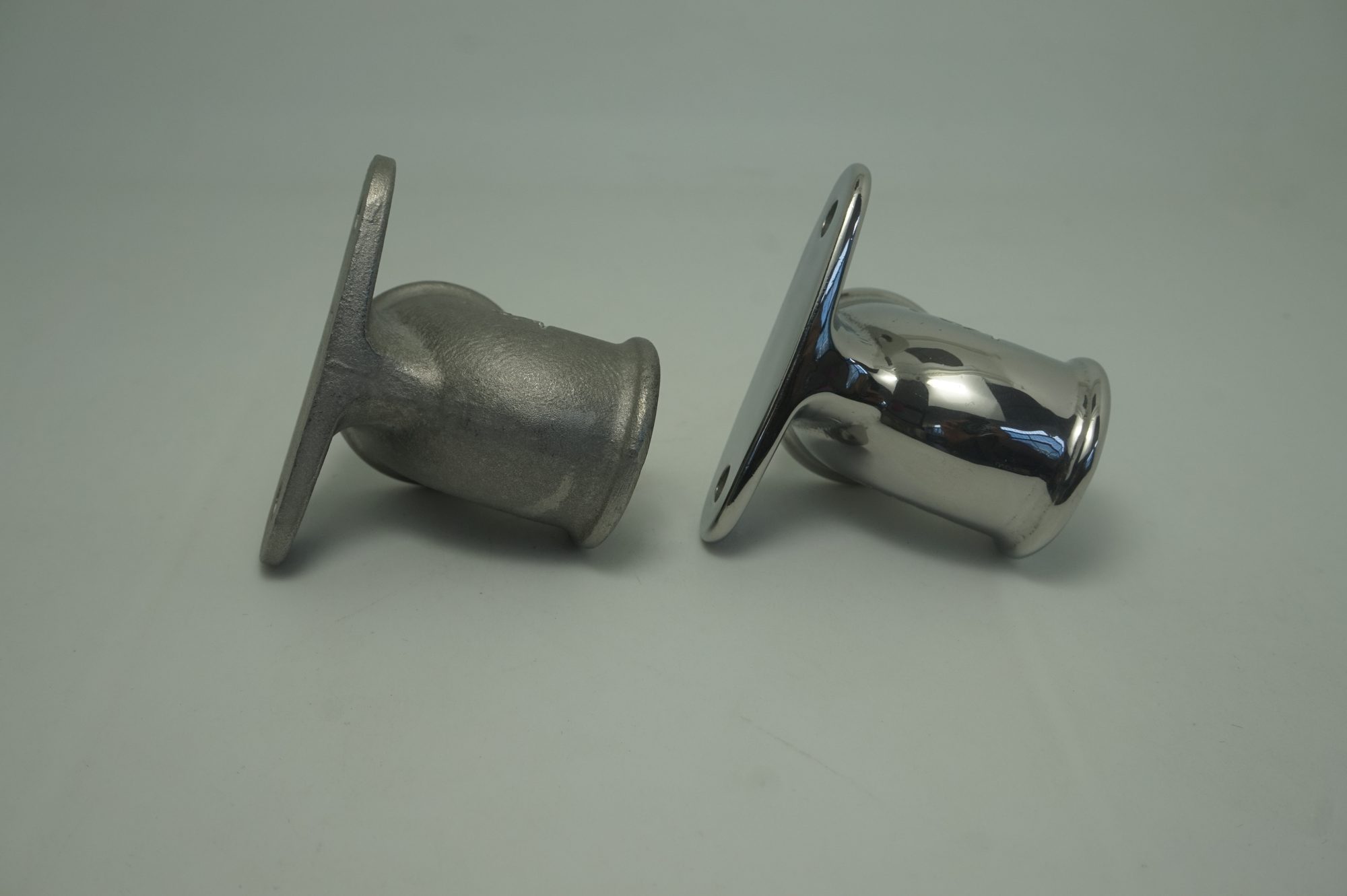
Most arguments about how to finish a small precision part start too late. The question “should this be tumbled or vibratory?” comes after the drawing has been released, after the tolerance stack-up has been frozen, and after the order has been placed. By then the useful part of the decision — what the surface is actually being asked to do — has already been made implicitly, by someone who was not thinking about finishing at all.
A workable selection framework moves that decision forward. It asks four things in order.
First: where does the part carry its requirement? Not “what finish does it need,” but which feature, and what failure occurs if that feature is wrong. A sealing bore, a contact face, and a decorative edge have different consequences when the surface condition slips. If nobody can point to the feature and the consequence, the requirement has not been specified — it has been assumed, and it will be checked the hard way.
Second: is condition being confused with roughness? Roughness is one measurable quantity. Condition includes scale, burr geometry, embedded media, films, residues in threaded roots and undercuts, and the direction of machining lay. Mass finishing responds to all of these, but roughness is the one number that gets written down. A part can meet a roughness limit and still fail to seat, seal, or plate because the condition around it was never described.
Third: does the process agree with the geometry? Small parts with thin walls, deep holes, or delicate features carry very different risks from solid bars. Where media can lodge, the process has a removal problem, not a finishing problem. Where the media is much larger than the part, the process will spend its time interrupting the part rather than acting on it. Mapping the loading path — how the media reaches every face, drains and returns, and whether separation from the part is complete — often determines whether the right cycle is possible at all.
Fourth: who decides the part is done? A finishing operation in a production chain belongs to somebody. If the acceptance boundary is diffuse, then the answer to “is this good?” becomes a judgement about the last station that touched it, which is usually the wrong station. Where a defined record exists — a trial run before the order, a documented incoming condition, and a named release decision — the same cycle can be repeated and defended.
Two practical points follow from these questions.
The selection is made on evidence, not on cycle time quoted over the phone. A short confirmation run on the actual parts, in the actual quantity class, surfaces everything the catalogue will not: media retention, staining, damage to edges, the condition of features that only the loading path can reach. That run becomes the specification for production.
And the ground is prepared more easily. When a part reaches the finishing shop still described in vague terms, the first hour is spent recovering intent. Where the drawing, the trial record and the release decision already agree, the same hour produces parts.
For small precision parts, the differences between finishing routes are real but secondary. What usually separates a repeatable result from a negotiated one is whether the requirement was ever written down, and whether anybody owns the decision that the part has met it.
— This article reflects the author’s work with outsourced finishing operations. Machine and media names are deliberately omitted; suitability depends on the parts, the process boundary and the acceptance criteria in force.
About the author
Max Xu is Sales at SurfacePolish (Xiamen Jintaijin Polishing Technology Co., Ltd.), a Chinese
manufacturer of mass finishing equipment and media. He can be reached at service@surface-
polish.com. The technical reference for the tumbling route discussed above is at https://surface-
polish.com/rotary-barrel-tumbling-machines_c8
Transparency note
This article was drafted with AI assistance under the direction of the author and is published with the approval of SurfacePolish. It presents production practice and reasoning, not measured test results: no measured data, customer case, capacity figure or price appears in it. The author is contactable at the address above should anything need correcting or removing.
Disclosure: this article was drafted with AI assistance and is released with the approval of SurfacePolish.
