

It started with a sharp local pain over her right eyebrow and gradually spread across her forehead. She said her energy felt like it was sucked out of her body, starting above her gut. Within a few minutes, ugly pressure felt like a tight helmet pressing on her head.
For my wife Risa this was almost daily suffering, as one of an estimated 18% of women in America with migraine headaches.
For many years, the migraine headaches shackled her, and I suffered watching her hurt. The search began for medicines and doctors who might have a cure or at least something better than ibuprofen or Tylenol.
Between drugs, doctor visits, and lost work, headaches cost the United States approximately $70–80 billion per year. They cause emotional breakdowns, divorce, and loneliness, primarily for women.
Risa was living in that migraine pit for the last 15 years, and it seemed to be getting worse despite injections, Botox, and expensive pills that cost almost $2,000 a year. Doctors limit pills by prescription to eight per month so you can’t become too reliant on them.
Finally, thanks to good luck, serendipity, and desperation, my son Ari, who is a psychologist and life coach, suggested that Risa try an approach he had heard about at a meeting of health entrepreneurs. A man by the name of Kevin Wissman in Colorado Springs had developed a program called Migraine Reset and Retrain. It’s based on coaching, group dynamics, and neuroplasticity that he claims helps women overcome migraines. Kevin was a long-time migraine sufferer himself.
Ari pushed Risa to check out the 10-week program and give it a try. “What do you have to lose, Mom,” he kept saying, and eventually she joined Wissman’s group.
Risa had the benefit of seeing the power of changing brain patterns in her educational therapy practice, where she has changed the lives of hundreds of kids and teens over 50 years of work.
Wissman’s program offered her the opportunity to try changing her own brain patterns. She was skeptical when she signed up for the video Zoom coaching challenge, but nothing else had worked so she dove in.
Kevin only takes women for his sessions, but there are weekly opportunities for partners to have separate group meetings.
The $5,000 10-week program demands commitment and perseverance. At the outset he lays out “The Daily 5.” His theme is “neurons that fire together wire together.” He favors rhyming and metaphors to help the ideas and the daily actions stick.
The Daily 5
- Wissman asks participants to write out their life goals and migraine goals, and to repeat them to themselves three times per day.
- Floss your mind. Carry on an internal dialogue of gratitude thinking through reading, journaling, listening, and repetition. He stresses that life is about possibilities and draws upon the approaches of Tony Robbins and Jim Kwik. The migraine mindset is one in which your brain goes into protection mode which culminates in a headache. If you can break that pattern through various techniques he teaches, you can break the migraine syndrome.
- Movement, stretching, exercise, and strengthening are vital in calming the mind to prepare it for mind retraining.
- Nervous system regulation is vital. You have to accept and practice the relaxation and regulation techniques he teaches. Breath work is extremely important in staving off headaches when they begin. Kevin, and now Risa, use an app you can get on your phone called Binaural Beats. It has been a gamechanger for her.
- He teaches migraine brain training exercises, which literally retrain your brain to stop the patterns that give you migraines.
The Wissman Migraine Reset and Retrain program is a lot more than a brain fitness camp. A crucial part of the program is the personal connections formed among the participants. There are several group coaching sessions per week and individual coaching sessions which enable participants to talk about their struggles and successes. They are the glue that makes this difficult journey work for most of the participants.
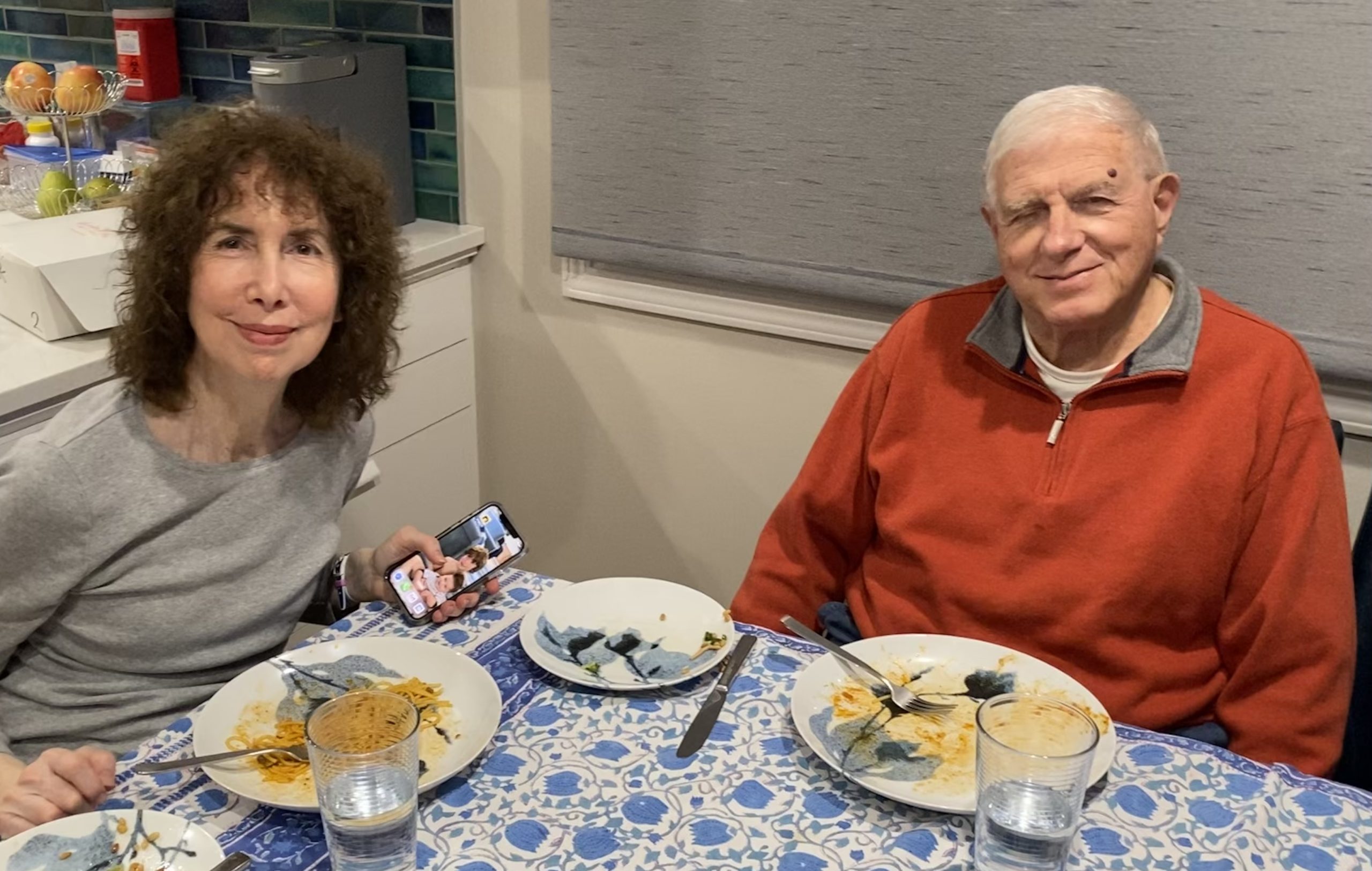
For my wife Risa, the past year (she added on several months to the coaching) has been truly life changing. She has thrown away the headache medicines. She advocates for Wissman’s program to her doctors. Our life together is so much better without the constant fear of the next headache.
Migraine suffering spoils your life. Risa has escaped it, but still maintains the routine that enabled her to escape.
My son Ari said “Mom, what do you have to lose?” She has lost that squeezing imagined helmet that was ruining her life.
Question: What techniques do you use to cope with stress and pain?
