

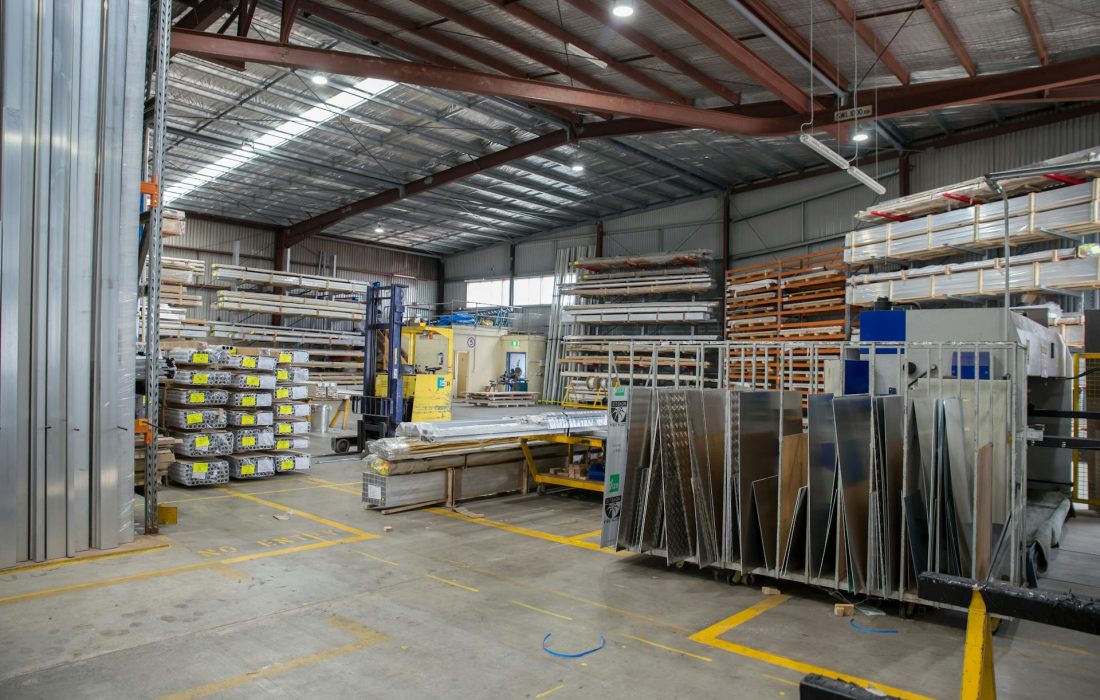
When floor space is tight, inventory mistakes become expensive very quickly. A few extra pallets of slow-moving stock can block production flow, stretch picking times and leave your team working around clutter instead of building efficiently. For manufacturers dealing with rising costs, unpredictable lead times and growing customer expectations, the question is no longer whether inventory needs attention. It is how to make stock work harder in the space you already have.
The good news is that you do not always need a bigger unit or a full warehouse redesign to regain control. In many cases, the smartest gains come from sharper forecasting, better stock segmentation and a more flexible approach to overflow capacity.
Start by identifying what is really consuming your space
Many manufacturers assume the problem is simply “too much stock”. In practice, it is usually a mix of issues: outdated reorder points, excess safety stock, poor location discipline and obsolete materials that never quite leave the building. Before changing systems or layouts, look closely at what is actually filling shelves, racking and floor areas.
A practical review should separate stock into clear groups:
- fast-moving items essential to production
- seasonal or project-based stock
- slow-moving and obsolete inventory
- bulky items that take up disproportionate space
That exercise often reveals a simple truth. Not all stock deserves prime space near the line.
Use ABC analysis to protect your most valuable space
If every SKU is treated the same, your layout will almost always become inefficient. ABC analysis remains one of the most effective ways to prioritise storage. A-items are high-value or high-usage components that need to be easy to access. B-items require sensible placement and regular review. C-items can often be stored further away, consolidated or moved off-site.
This matters even more when capacity is under pressure. Manufacturers that reserve their best internal space for the inventory that directly supports throughput tend to reduce travel time, improve picking accuracy and free up room for operational flexibility. That shift also supports the wider move away from blanket stockpiling, as more manufacturers adopt a just-in-case approach to inventory to protect themselves against disruption, even though that creates obvious pressure on available space.
Tighten forecasting before increasing storage
One common mistake is responding to congestion by finding more room before addressing why inventory levels rose in the first place. Better forecasting will usually deliver a stronger return than simply storing more.
That means combining sales history with live operational inputs such as supplier reliability, minimum order quantities, production schedules and known seasonal swings. It also means reviewing forecasts more frequently. A quarterly review is often too slow when demand patterns and lead times are shifting month by month.
A more disciplined forecasting process should help you answer four questions:
What do we genuinely need on site?
Critical components with unstable lead times may justify higher buffer stock. Commodity items with reliable supply often do not.
Which items are routinely over-ordered?
Large batch buying can reduce unit cost, but those savings disappear quickly when stock occupies valuable production-adjacent space for months.
Where do shortages actually hurt?
Not every stockout carries the same operational risk. Focus your buffer stock where downtime or missed orders would be most damaging.
What can be moved out of the core footprint?
Some items need to be close to production. Others simply need to be available within a sensible lead time.
Treat overflow storage as part of the strategy, not a last resort
Manufacturers often see external storage as a temporary fix. Used properly, it can be part of a more deliberate inventory model. If you know certain materials, packaging or archive stock do
not need daily access, moving them out of the main site can create room for faster-moving inventory and safer workflows. For businesses that need flexible capacity without committing to a larger premises, access to self storage in Sheffield can help relieve pressure during seasonal peaks, product launches or longer procurement cycles. The key is to use external space selectively, with clear rules around what goes off-site, how it is labelled and how quickly it can be retrieved. That approach fits a broader market reality. Businesses holding more inventory for resilience are running into tighter capacity and higher warehousing costs. For smaller and mid-sized manufacturers in particular, flexible overflow space can be more practical than taking on a long lease.
Improve slotting and location discipline
Space constraints are not only about how much stock you hold. They are also about where stock sits and how consistently locations are managed. Poor slotting creates hidden waste. Teams spend longer searching, partial pallets get abandoned in walkways and replenishment becomes reactive.
A smarter slotting plan should reflect real usage patterns. Frequently picked components should sit closest to the point of use. Bulky or awkward items should be placed where handling is safest and least disruptive. Slow movers should not occupy the most accessible bays simply because they were put there first.
Even small improvements make a difference. Clear bin labelling, standard location codes and regular cycle counts can reduce duplication and stop “ghost stock” from consuming space on paper and on the floor.
Build a routine for stock removal, not just stock control
Many sites are reasonably good at receiving and storing inventory, but much less disciplined about removing what is no longer useful. That is how dead stock builds up year after year.
Set a monthly or bi-monthly review for obsolete, excess and non-conforming items. Give one person ownership of the process and define what happens next, whether that means using the stock, returning it, writing it off or relocating it. Space recovery should be treated as an operational KPI, not a once-a-year clean-up exercise.
The manufacturers that handle space best are rarely the ones with the biggest buildings. They are the ones with the clearest rules. They know which stock earns prime space, which inventory can sit elsewhere and which materials should leave the site altogether. If your facility is feeling cramped, start there. Tighten forecasting, segment stock more intelligently and make overflow capacity part of the plan rather than a panic response.
