

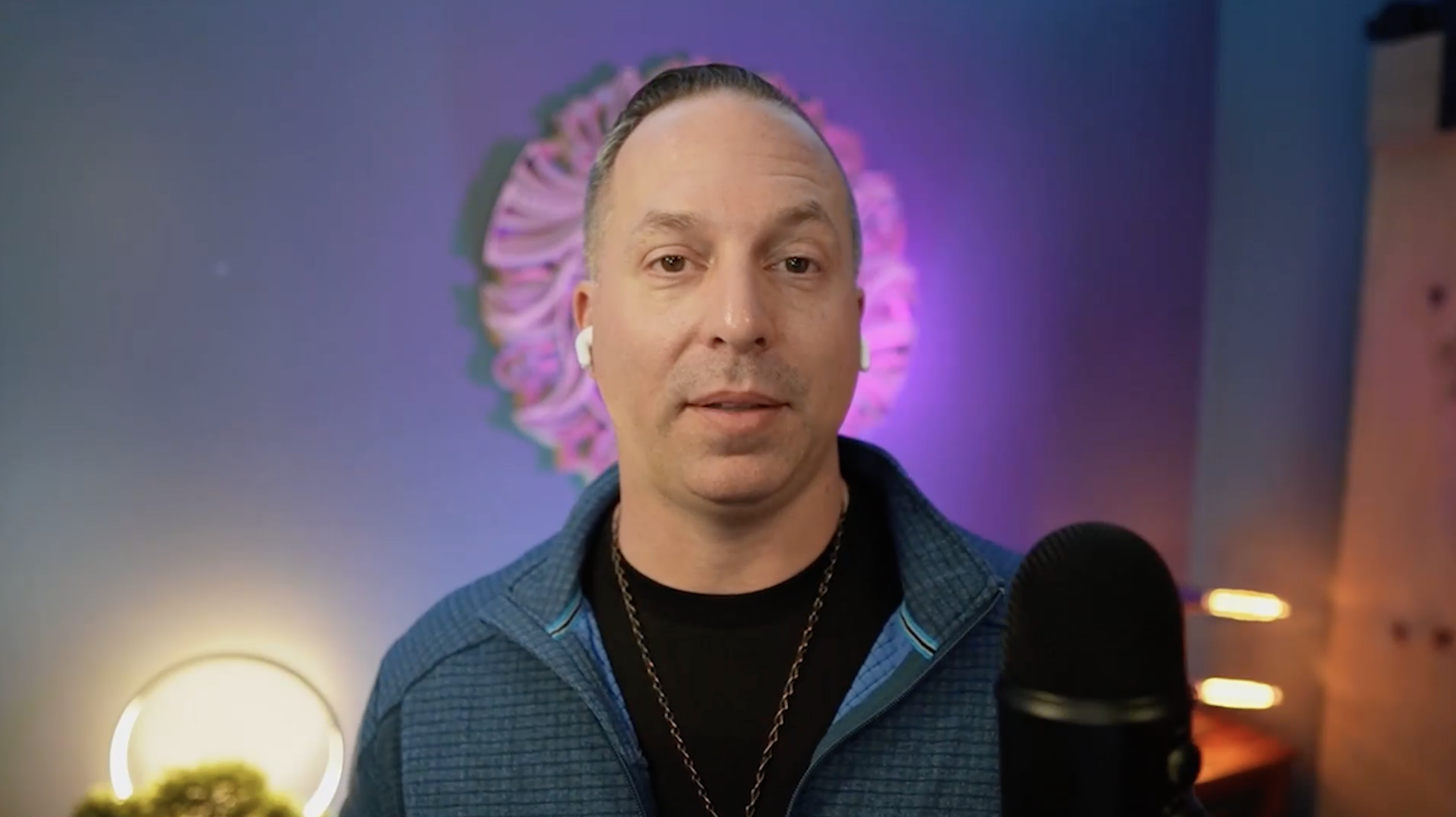
Today’s AI conversation is about vulnerability—not automation, efficiency, and replacing jobs.
Brooks Canavesi, co-founder of Baryons, is taking AI somewhere different. He’s not trying to replace the human. He’s trying to make the human better. I’ve actually been using ChatGPT to supplement my own life coach for a while now, so when I learned what Baryons is building, I had to find out more.
The company calls it a Flourishing Partner. It’s an AI platform that checks in with you on your phone, holds you accountable, and actually pushes back when you need it.
The goal? Help people flourish.
Listen on your favorite podcast app using pod.link.

 .
.
View the podcast at the bottom of this post or on our YouTube Channel.
Facebook: https://www.facebook.com/swarfcast
Instagram: https://www.instagram.com/swarfcast/
LinkedIn: https://www.linkedin.com/company/todays-machining-world
Twitter: https://twitter.com/tmwswarfblog
*************
Link to Graff-Pinkert’s Acquisitions and Sales promotion!
Brooks has been in technology for a long time. His team built systems for DARPA, the Department of Defense, Mary Kay Cosmetics, and AccuWeather before landing in the AI space. They were working in machine learning before most people knew what it was. But Brooks is honest about the fact that ChatGPT was a reset for everyone, including them.
What he and his team decided to do with that moment is what makes this conversation interesting. While the big frontier labs like OpenAI, Google, and Anthropic raced toward general intelligence, Brooks wanted to build something more specific. Something more human-focused.
“We wanted to focus on increasing human agency. Not taking jobs away, but working with humans to improve their overall abilities.”
Baryons’ product is voice-based. You call in, talk to your AI Mentor for a few minutes, set your intention for the day, and check back in at the end of your shift. It listens. It remembers. And unlike most AI tools, it’s designed to challenge you, not just tell you what you want to hear.
That last part matters more than it sounds. Brooks explained that a lot of therapists are seeing clients come in with damage done by AI tools in between sessions. LLMs such as ChatGPT, Claude, and Gemini can be sycophantic. They agree too easily. They reinforce patterns instead of breaking them. Baryons is built to interrupt that.
For businesses, the product goes even deeper. When you have a whole team using it, Baryons anonymizes the signals and surfaces patterns for leadership. If eight out of ten people on the manufacturing floor are mentioning the same supply chain problem, management hears about it without anyone being called out. It’s a way to give employees a voice and give leadership information they’d never otherwise get, especially in a remote or distributed workforce.
Brooks told me that people who use Baryons regularly start to change in ways others can notice, including him. “I hear from people I haven’t seen in six months. They say ‘something’s different about you. And it’s a good thing.’”
I pushed Brooks to explain what separates Baryons from how I’m using ChatGPT Plus, which has persistent memory built in and could read my voice inflection (though I haven’t used that setting yet). He said there are overlaps, but it’s different when you call Baryons on the phone to check in because the exchange feels even more like talking to a person.
The sycophancy is also a huge difference. I asked him to explain why Baryons is different. He said it comes down to what they call the Understanding Engine. It’s a patented technology that analyzes how you speak, the words you use, your tone, and up to 26 dimensions of how you think. It’s designed to build a picture of you the way a person would, organically through conversation, and use that to respond in the way that actually serves you. It doesn’t just reply in a way that feels good in the moment.
I like to think I want to be challenged, but I confess that when ChatGPT asks me sensitive questions like a mentor might, sometimes it can really cut. I’ve lashed out at it, saying “you don’t understand me!” I’ll type swear words at it. Sometimes it really doesn’t get me. But unfortunately it’s also right sometimes about things I don’t want to hear (in my case, read on a screen).
I am slightly nervous about how it will feel. But I’m going to try Baryons. The image of myself interacting in an oral conversation with an AI agent on my phone makes me uncomfortable. I think before long it’s going to sort of feel like I’m talking to a real person. Thinking about this makes me feel ummmm…what’s another word for uncomfortable. I guess I’ll ask Claude for a suggestion.
From Claude:
For that last word — you’re describing the feeling of unexpected intimacy with a machine. A few options:
Vulnerable — probably the most honest and resonant
Exposed — similar but slightly more raw Uneasy — softer, more ambiguous
Strange — simple, unpretentious, very you
I’d go with vulnerable. It’s honest, it fits the personal development theme of the whole piece, and it’ll resonate with readers who feel the same way about the idea.
Question: Could you ever see yourself working with an AI Mentor?
