

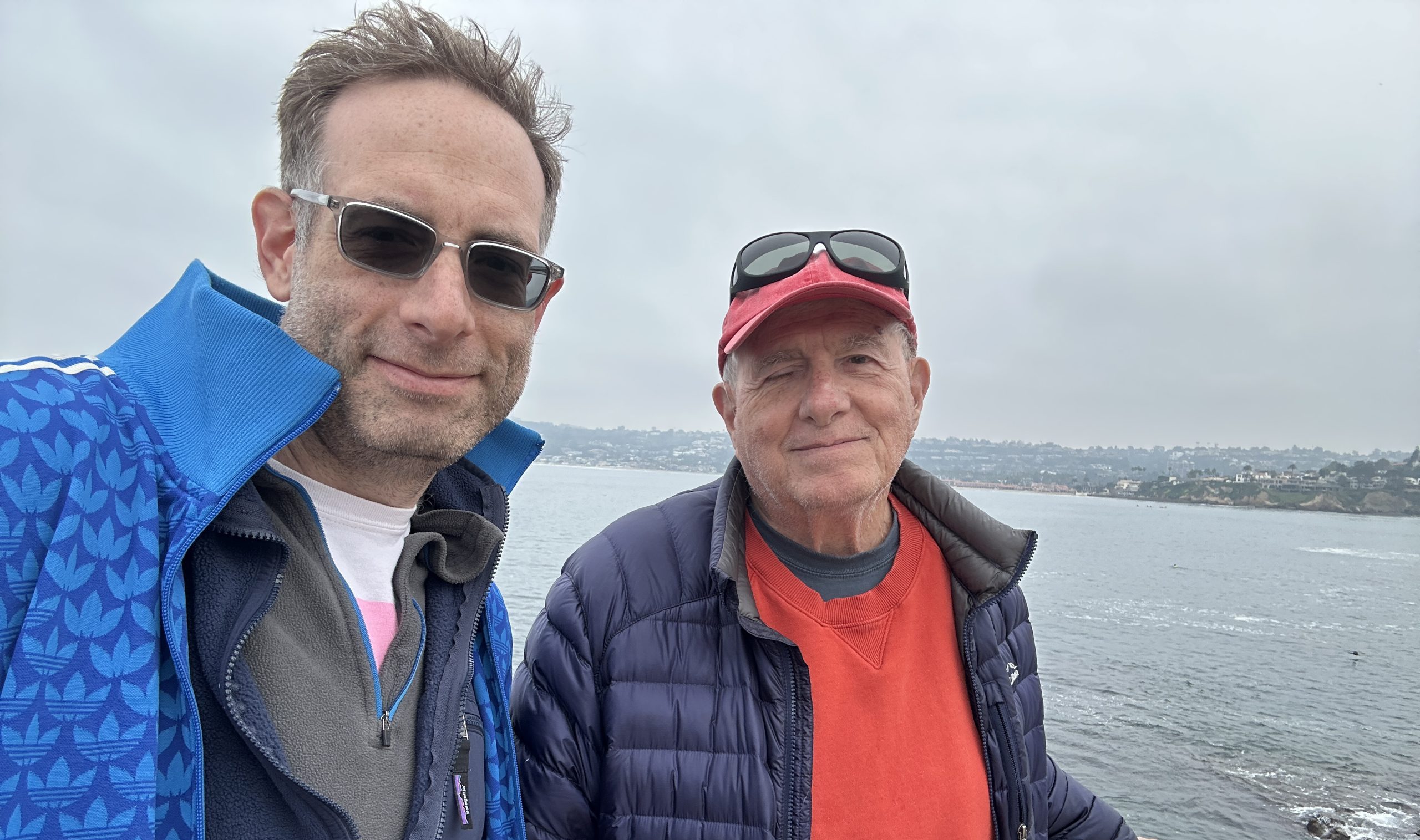
The first quarter of 2026 stunk for Graff-Pinkert’s used machinery business. But fortunately, in the last few months, we’ve made some really good deals, selling old Davenport and Acme screw machines, as well as some expensive late model CNC multi-spindles. Today, Lloyd Graff and I give our take on why the year unfolded this way and what we predict the machining industry will look like for the rest of the year. We’re optimistic because it seems like onshoring is real and tariff surprises are no longer a surprise.
Listen on your favorite podcast app using pod.link.


Facebook: https://www.facebook.com/swarfcast
Instagram: https://www.instagram.com/swarfcast/
LinkedIn: https://www.linkedin.com/company/todays-machining-world
Twitter: https://twitter.com/tmwswarfblog
*************
Link to Graff-Pinkert’s Acquisitions and Sales promotion!
It’s Hard to Sell Expensive Machines
Noah: We purchased an INDEX MS22-8 CNC Multi-Spindle, manufactured 2019, with a partner at an auction. Brand new, that machine goes for over three million. We were asking less than half of new. And the thing is, even though something is worth that, it’s hard to find someone to actually buy it.
Lloyd: Who’s to say it’s worth that? It’s worth it if somebody pays it.
Noah: We came very close with one company. We were on the one yard line, a very big corporation, but then it went up the rung, at the very end they said, “Well, the machine we already have has four Y-axis, and this only has two Y-axis.” I think it was an excuse to shoot it down.
Lloyd: It may very well have been a political battle within the big company. That’s why it’s difficult to sell expensive machines to big companies. It’s also hard to sell to small companies, because small companies don’t have access to that kind of money.
Noah: If you’re going to buy a machine that costs over a million dollars, you have to have a job for it. It’s not something you spec on. People might think, all right, maybe I can pay three hundred grand for a used machine. But to pay a million dollars for a used machine, it just doesn’t compute. Even if it’s half price. Even if it’s a third of the price.
Noah: So we got creative, and a little serendipity showed up. I was texting with an old customer to offer a different Index we have for sale. Then he says to me, “Hey, I have an idea for a trade for your 2019 machine.” We ended up trading our INDEX for his Tornos MultiSwiss 8×26, a 2017 with 8,500 cutting hours, plus cash. He really wanted an Index. His MultiSwiss operator is retiring, and his people wanted another Index.
Lloyd: And for all we know, we might end up with a trade on that too.
Onshoring Is Real
Noah: Like them or don’t like them, tariffs are very influential and they’re happening. Is on-shoring finally real?
Lloyd: That’s what we’ve been told by our clients. Onshoring is real, because it’s not so much about price. It’s about fear of what prices might be, and it’s about fear of what the Chinese might do, let’s say, if there was an invasion of Taiwan.
Noah: We like to use fear of tariffs as an excuse for why people didn’t buy a lot of equipment from us at the beginning of the year. But it seems like now we’ve broken through to some extent.
Lloyd: I think so. To some degree, people are being forced to buy, because they have an avalanche of orders. But I also think there’s a genuine fear by big companies that they cannot have crucial production in China. What I’m hearing from clients is their customers are saying, “We’re not worried about price. We’ll accept price raises. What we want is quality, and we want certainty of delivery.” With China, they may be able to get price, but they cannot get certainty of delivery. And, they cannot get certainty of quality. So while China can still undercut United States manufacturers on price, price is not the only thing that dictates decisions.
50 Bucks an Hour and Gila Monster Saliva
Noah: What’s a contrarian prediction you have?
Lloyd: Fewer and fewer men are deciding to go to college, because they don’t want to accumulate the debt, and they don’t see the opportunities in the jobs they used to get. (It used to be) “I want to be a programmer, I want to be an accountant, I want to be a lawyer.” Those aren’t necessarily great jobs to go into today, particularly if AI is going to take over so much of the white collar world. But what you do have a need for is people who can run factories and people who can work in factories.
So my contrarian view is that more and more people are going to go to vocational school and technical school, and you will see a turnaround in the amount of people available for machining. But you will also see the pay for machining work go up dramatically. You’re going to see people routinely making fifty dollars an hour for machining jobs.
Noah: If there’s a bigger supply of people who want to do it, wouldn’t that make wages go down?
Lloyd: The demand for quality people will continue to be high, and contract manufacturing people will wake up and decide, if I want to hire somebody, I’m going to have to pay them.
Lloyd: What do you think is a surprise that’s coming?
Noah: I’m not that original with this one. Stephanie and I have made an investment, and we’re going to invest a little bit more, in GLP-1 stocks. Scott Galloway says that in the next ten years GLP-1 technology is going to be a bigger development in the world than AI. Is that true? I don’t know. But every day these GLP-1s seem to do something new that we didn’t think they could do.
Lloyd: Do you know how they developed the first GLP-1 drug?
Noah: I do not.
Lloyd: It came from testing the venom of a Gila monster. It was originally developed for diabetes.
Noah: Serendipity.
What We’re Using AI For
Lloyd: What did you use AI for today?
Noah: I took a database of machines and had Claude build a call list for us. We’re purchasing a Star SR32, so now I have a list of customers all organized and ready to work. What deep dark secrets did you use it for?
Lloyd: I used it this morning to check how long a CT scan would take, because my wife was going to have a CT scan ahead of hip replacement surgery.
Noah: And what did it say?
Lloyd: Five to ten minutes.
Noah: And how long did it take?
Lloyd: Five to ten minutes. She was greatly relieved before she went, knowing that was likely all it would take.
Noah: Anything else you’d like to say to the people of the world? I think I’m ready to drop the mic.
Lloyd: Live each day. Savor every moment.
Noah: Thank you. Let’s do this again soon.
Podcast: Play in new window | Download
