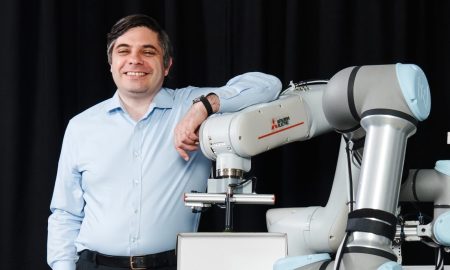
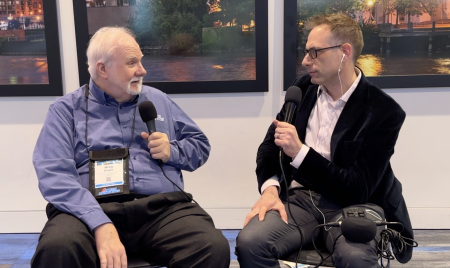
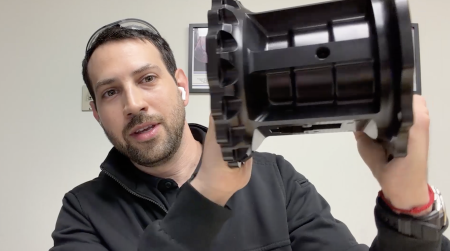
Open your fridge and grab a beer without knocking anything else over. It’s usually not hard for a human to do it. But getting a robot to do the same task can take an engineer weeks or months. George Konidaris is a professor of computer science at Brown University, director of the Intelligent Robot Lab, and cofounder of Realtime Robotics. Their technology does that kind of motion planning in minutes instead of weeks, and it’s running on the manufacturing lines of major automakers right now. He was on the show three years ago, when the technology worked in the lab. A lot has changed. The company closed a 45 million dollar Series B and is cash flow positive. ******** Listen on your favorite podcast app using pod.link.     . View the podcast at the bottom of this post or on our YouTube Channel. Follow us on Social and never miss an update! Facebook: https://www.facebook.com/swarfcast Instagram: https://www.instagram.com/swarfcast/ LinkedIn: https://www.linkedin.com/company/todays-machining-world Twitter: https://twitter.com/tmwswarfblog ************* Link to Graff-Pinkert’s Acquisitions and Sales promotion! ************* Main Points Grabbing a beer is harder than it looks Real Time came out of research George and his colleagues did on robot motion planning, which is how a robot decides on its own how to move without hitting anything. “There are many ways in which you could reach into your fridge and grab a beer where you would hit the fridge or a beer or knock something over and you don’t do any of those.” You solve that without thinking. For a robot it’s a hard computational problem, and the first paper posing it was written in 1979. What George and his collaborator found was a way to solve it in milliseconds instead of seconds or minutes. The original breakthrough needed a custom processor. It runs in software now. Robots are still stupid, but…

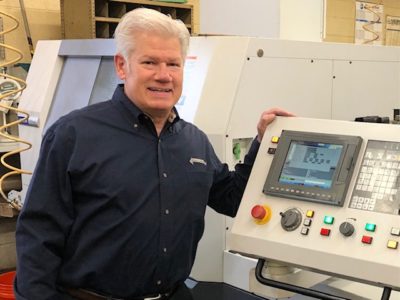
Today’s guest on the show is Paul Huber, CEO of COMEX, in Monroe Connecticut. Paul is a machinery dealer specializing in cam Swiss automatics. That’s cam Swiss, not CNC. I’m talking about Bechlers, Stroms and Escomatics, not Citizens. Paul is 84, but proudly says feels like he is 60 as he raises his 17-year-old son. He has been working on screw machines for over 67 years, starting as an apprentice in Switzerland. Early in his career, Paul worked as a technician for European screw machine builders. Later, he ran his own production shop in the US. Then he became a machinery dealer and sold some of the very first CNC Swiss machines. For decades, he has rebuilt and sold cam automatic screw machines, specializing in Swiss-type. Paul learned business skills watching his dad wheel and deal as a dairy farmer in Basil, Switzerland. He managed a Jazz group as a teenager. He is a skilled engineer, an astute entrepreneur, a natural at stumbling on serendipity and hell of a story teller. He also loves to speak his mind, which you will see when we discuss the skills gap problem in the United States. So sit back and enjoy our conversation…


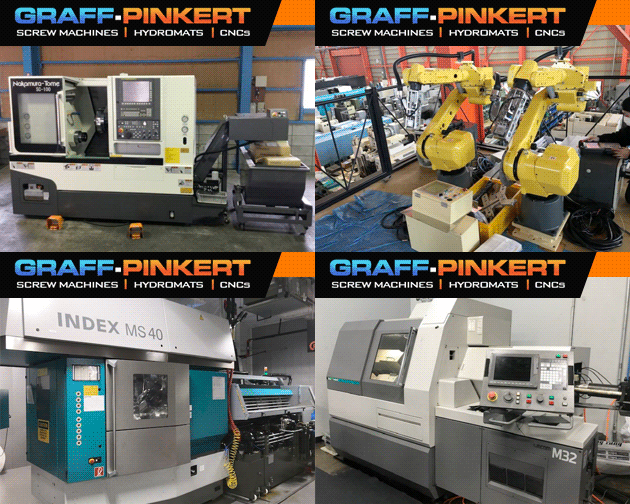
The first quarter of 2026 stunk for Graff-Pinkert’s used machinery business. But fortunately, in the last few months, we’ve made some really good deals, selling old Davenport and Acme screw machines, as well as some expensive late model CNC multi-spindles. Today, Lloyd Graff and I give our take on why the year unfolded this way and what we predict the machining industry will look like for the rest of the year. We’re optimistic because it seems like onshoring is real and tariff surprises are no longer a surprise. Listen on your favorite podcast app using pod.link.     . View the podcast at the bottom of this post or on our YouTube Channel. Follow us on Social and never miss an update! Facebook: https://www.facebook.com/swarfcast Instagram: https://www.instagram.com/swarfcast/ LinkedIn: https://www.linkedin.com/company/todays-machining-world Twitter: https://twitter.com/tmwswarfblog ************* Link to Graff-Pinkert’s Acquisitions and Sales promotion! It’s Hard to Sell Expensive Machines Noah: We purchased an INDEX MS22-8 CNC Multi-Spindle, manufactured 2019, with a partner at an auction. Brand new, that machine goes for over three million. We were asking less than half of new. And the thing is, even though something is worth that, it’s hard to find someone to actually buy it. Lloyd: Who’s to say it’s worth that? It’s worth it if…

We’re on vacation this week.  So we’re publishing one of my favorite Blog/Videos that’s been on my mind lately. I highly recommend you watch the video version of this podcast. Click on the link to go to the video. I won a few big matches on my high school Tennis team, but I was never awesome. I never won the big tournaments. What killed me was that I always had more fun and played better in practice than in big matches when pressure made my muscles tight. For the last few months, I’ve been fascinated by a discovery a tennis pro made 50 years ago that’s revolutionizing how people perform under pressure. It started when I listened to “The Coach in Your Head,” an episode from Michael Lewis’s “Against the Rules” podcast. Check out the video I made breaking down the whole story on my YouTube channel, I Learned It on a Podcast. We all experience this. Job interviews, presentations, equipment demonstrations. We “play tight” when stakes are high, performing worse at the very things we’ve trained for. Tim Gallwey figured out why this happens. In 1974, he published The Inner Game of Tennis, decades before today’s coaching boom. Like me, he was…

Join Email List

Subscribe to the Swarfblog